31 March 2026
Factory vs Aftermarket Tint: What’s the Difference and Which Is Better
If you are comparing factory vs aftermarket tint, you are not alone. Many drivers assume all tinted windows are the same, but that is not the case.
The truth is, these two types of tint serve very different purposes. One is mostly cosmetic, while the other delivers real performance benefits.
In sunny environments like Hawaii, understanding this difference can directly affect your comfort, safety, and long-term vehicle protection.
In this guide, you will learn:
- What factory tint actually is
- How aftermarket window tint works
- The real difference in tint performance
- Which option is best for your vehicle
For expert tinting solutions, you can explore services at TNT Tinting.
What Is Factory vs Aftermarket Tint
The difference between factory vs aftermarket tint comes down to how the tint is created and what it does.
Factory Tint on Cars
Factory tint on cars is built into the glass during manufacturing.
It is often called:
- Factory tinted auto glass
- Privacy glass
Key characteristics:
- Dye is embedded in the glass
- Usually found on rear windows of SUVs and trucks
- Designed mainly for privacy
Important note: factory auto tint does not provide strong heat or UV protection.
Aftermarket Window Tint
Aftermarket car window tinting is a film applied to the inside of your windows after purchase.
It comes in several types:
- Dyed film
- Carbon film
- Ceramic film
Key benefits:
- Heat rejection
- UV protection
- Customizable darkness levels
You can explore available options at window tint products.
Privacy Glass vs Tinted Windows
A common confusion is privacy glass vs tinted windows.
- Privacy glass (factory tint) = dark appearance only
- Tinted windows (aftermarket) = performance + protection
This is one of the biggest misconceptions when comparing types of tinted car windows.
Key Differences in Factory vs Aftermarket Tint
Heat Rejection and Comfort
This is where the biggest difference in tint performance appears.
- Factory tint: Minimal heat reduction
- Aftermarket tint: Significant heat rejection
High-quality films, especially ceramic, can block a large amount of solar heat.
UV Protection
- Factory windshield tint and rear glass offer limited UV blocking
- Aftermarket films can block up to 99 percent of UV rays
This helps protect both your skin and your car’s interior.
Appearance and Customization
Factory tint:
- Fixed darkness
- Limited to certain windows
- Cannot be changed
Aftermarket tint:
- Fully customizable
- Matches all windows
- Wide range of shades
This flexibility makes aftermarket window tint more appealing for many drivers.
Cost and Value
Factory tint:
- Included with the vehicle
- No additional cost
- Limited benefits
Aftermarket tint:
- Requires upfront investment
- Provides long-term comfort and protection
You can get pricing details through instant tint estimate.
Durability and Maintenance
Factory tint:
- Permanent but basic
- No upgrade options
Aftermarket tint:
- Long-lasting with proper installation
- Can be replaced or upgraded
Professional installation ensures the best results.
Can You Put Tint Over Factory Tint
Yes, you can apply tint over factory tint.
This is a common upgrade.
Benefits include:
- Improved heat rejection
- Better UV protection
- Enhanced appearance
This combination is often the best solution for drivers who already have factory tinted glass.
Real World Examples of Factory vs Aftermarket Tint
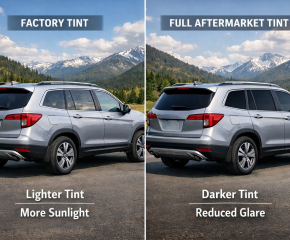
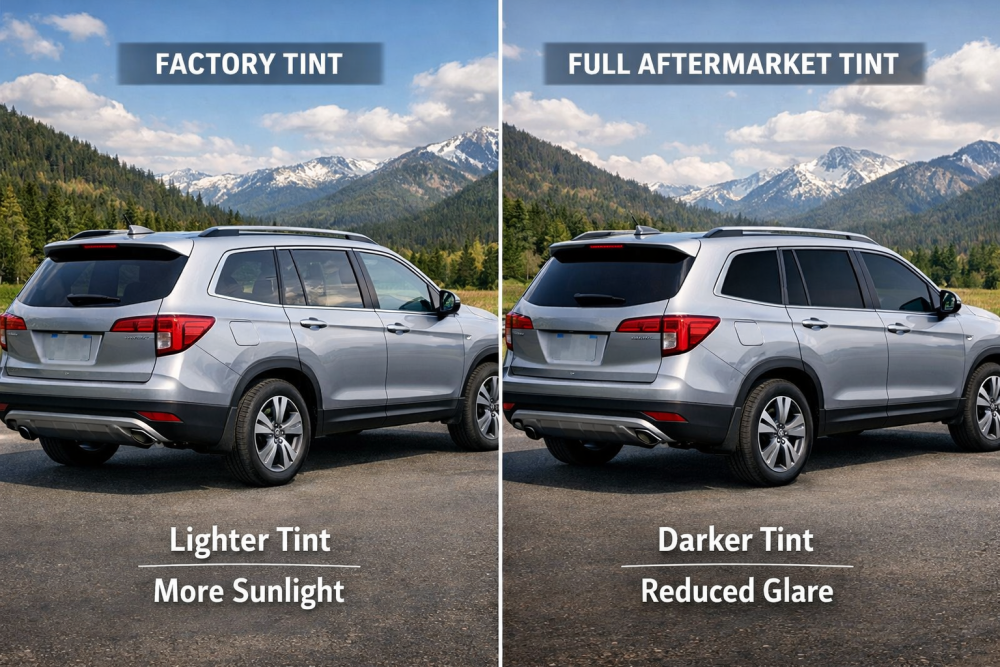
SUV With Factory Tint Only
- Looks dark from outside
- Still gets hot inside
- Limited UV protection
Upgraded With Aftermarket Tint
- Cooler interior
- Reduced glare
- Better comfort
Matching Front and Rear Windows
- Factory tint on rear windows
- Aftermarket tint applied to front
- Creates a uniform look
Best Practices When Choosing Tint
To get the most out of your tint, follow these tips.
Do Not Rely on Factory Tint Alone
It provides privacy but lacks performance.
Choose High Quality Film
Ceramic and carbon films offer the best results.
Follow Local Tint Laws
Different windows have different legal limits.
Work With Professionals
Professional installers ensure:
- Clean finish
- Proper adhesion
- Long-lasting performance
You can schedule service through contact tinting experts or find directions at tint shop location map.
Which Is Better: Factory or Aftermarket Tint
When comparing factory vs aftermarket tint, the answer is clear.
- Factory tint is mainly for appearance
- Aftermarket tint provides real benefits
For most drivers, especially in sunny climates, aftermarket tint is the better choice.
Conclusion: Understanding the Difference in Tint
The difference in tint between factory and aftermarket options comes down to performance.
Factory tint may look dark, but it does not provide the protection most drivers expect.
Aftermarket tint delivers:
- Heat reduction
- UV protection
- Improved comfort
- Custom appearance
If you want both style and function, combining factory tint with aftermarket film is often the best solution.
Frequently Asked Questions
What is factory tint on cars?
Factory tint is glass that has been dyed during manufacturing to create a darker appearance, mainly for privacy.
Does factory tint block heat and UV rays?
No, it provides minimal heat and UV protection compared to aftermarket tint.
Can you add tint over factory tint?
Yes, applying aftermarket tint over factory tinted glass improves performance and comfort.
What is the difference between privacy glass and window tint?
Privacy glass is factory-installed and mainly cosmetic, while window tint is a film that provides heat and UV protection.
Is aftermarket tint worth it?
Yes, especially in sunny climates, because it improves comfort, reduces heat, and protects your vehicle interior.
 .
.  .
.