
17 March 2026
Carbon Window Tint: What It Is, Benefits, and Carbon vs Ceramic Tint
Why Carbon Window Tint Is Popular in Hawaii
Hawaii’s year-round sunshine offers beautiful scenery and warm weather, but it also brings intense heat, glare, and strong ultraviolet exposure. For vehicle owners, window tinting is one of the most effective ways to improve comfort and protect interiors from sun damage. Among the many tint options available today, carbon window tint has become one of the most popular choices.
Carbon tint films are designed to reduce heat, block UV rays, and improve the overall appearance of vehicles. Unlike traditional dyed films that may fade or discolor over time, carbon films are engineered with advanced carbon particles that maintain their color and performance for many years.
For drivers in sunny climates like Hawaii, carbon tint offers several advantages:
- Significant heat reduction inside the vehicle
- Protection from harmful UV radiation
- Reduced glare for safer driving
- Long-lasting durability
- Sleek matte-black appearance
Professional tinting specialists often recommend carbon tint as a balanced option that delivers strong performance without the higher cost associated with ceramic tint technology.
If you want to explore tint options for your vehicle, you can review available films and services at TNT Tinting or browse the full range of window tint products offered by experienced installers.
What Is Carbon Window Tint?
To understand the benefits, it helps to answer a common question: what is carbon window tint?
Carbon tint is a specialized window film made with microscopic carbon particles embedded in the film layers. These carbon particles help block solar heat and ultraviolet radiation before it enters the vehicle.
Unlike basic dyed films, carbon tint does not rely on pigments to darken the glass. Instead, the carbon particles provide consistent color and heat-blocking performance.
Because of this advanced construction, carbon film tint provides several important benefits:
- Long-lasting color stability
- Better heat rejection than dyed films
- Non-metallic construction that avoids signal interference
- Improved durability in hot climates
This makes carbon film window tint a reliable upgrade for drivers who want stronger sun protection and improved interior comfort.
How Carbon Window Tint Works
The technology behind carbon window film is designed to manage sunlight before it enters the vehicle.
Carbon tint works through a combination of absorption and reflection.
The carbon particles inside the film:
- Absorb solar heat
- Block ultraviolet radiation
- Reduce visible glare
- Help regulate cabin temperature
Because the film is non-metallic, carbon tint for cars will not interfere with electronic signals.
Drivers can continue using:
- GPS navigation systems
- Bluetooth connections
- Cellular signals
- Satellite radio
This makes carbon tint especially useful for modern vehicles equipped with multiple electronic systems.
Carbon Window Tint Installation Process
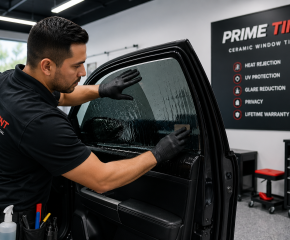
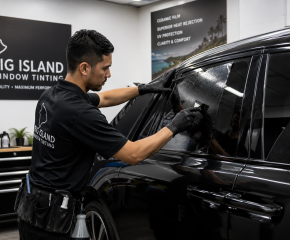
Professional installation is important to ensure carbon window tinting performs correctly and lasts for many years.
Although each tint shop may have slight variations in technique, most installations follow a similar process.
Step 1: Cleaning and Preparing the Glass
Before applying the film, technicians carefully clean the vehicle windows.
Any dust, dirt, or oil residue can prevent the tint from adhering properly.
Specialized cleaning solutions and lint-free tools are used to ensure the glass surface is perfectly clean.
Step 2: Cutting the Tint Film
Next, installers measure the windows and cut the carbon film to match the exact dimensions of each piece of glass.
Modern tint shops often use computer-assisted cutting systems to create precise film patterns for specific vehicle models.
Accurate cutting ensures:
- Clean edges
- Proper alignment
- Full window coverage
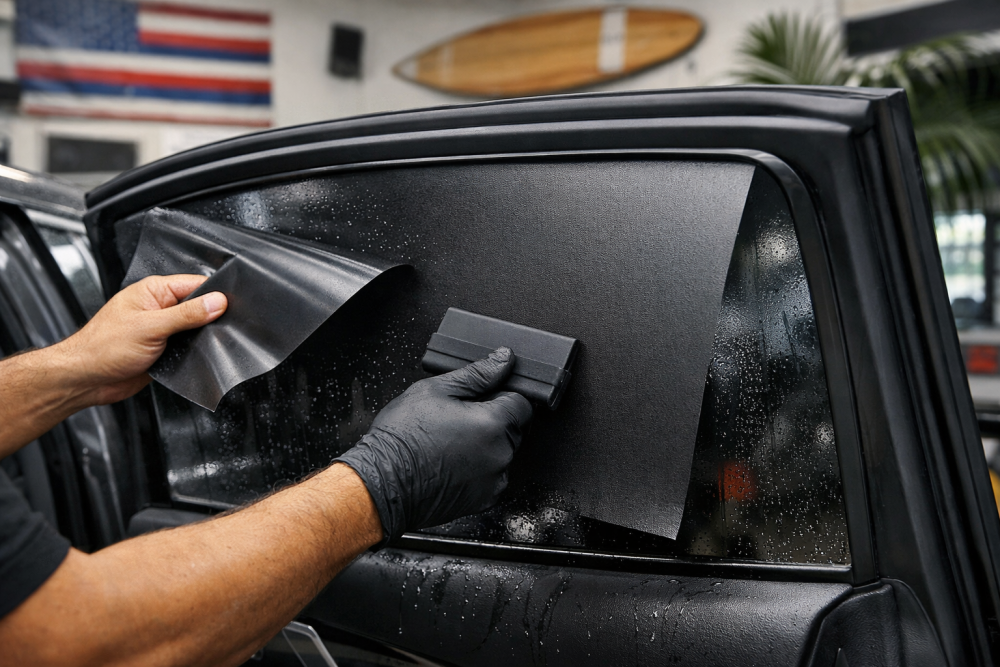
Step 3: Applying the Carbon Film
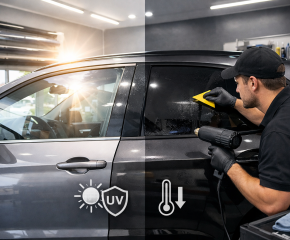
The tint film is applied to the interior surface of the window using a special installation solution.
Technicians position the film carefully and smooth it using professional tools to remove moisture and air bubbles.
This step ensures the film bonds evenly across the entire glass surface.
Step 4: Curing the Window Tint
After installation, the film must cure as the adhesive bonds to the glass.
Curing typically takes several days depending on temperature and humidity.
During this period drivers should:
- Avoid rolling down the windows
- Avoid cleaning the tinted surface
- Allow the film to settle naturally
Once curing is complete, the film becomes fully transparent and durable.
If you’re considering tint installation, you can request pricing or schedule service through an instant tint estimate or contact professional installers via the contact page.
Carbon Tint vs Ceramic Tint
Many vehicle owners compare carbon tint vs ceramic tint when deciding which film to install.
Both films offer strong performance, but they differ in technology and cost.
Dyed Window Tint
Dyed tint is the most basic type of window film.
While affordable, dyed tint usually:
- Fades over time
- Provides limited heat rejection
- Offers mainly cosmetic benefits
Because of these limitations, many drivers upgrade to carbon or ceramic films.
Carbon Window Tint
Carbon tint sits in the middle performance range.
Advantages include:
- Good heat rejection
- Long lifespan without fading
- Matte black finish
- No electronic interference
This makes carbon window tint a popular choice for drivers who want strong performance at a reasonable price.
Ceramic Window Tint
Ceramic tint represents the highest performance tier in window film technology.
Ceramic films provide:
- Maximum heat rejection
- Superior UV protection
- Exceptional optical clarity
- Extremely long durability
However, ceramic tint typically costs more than carbon film.
When comparing carbon vs ceramic window tint, carbon offers excellent performance at a more affordable price point.
Benefits of Carbon Window Tint for Vehicles
Drivers who install carbon tint often notice immediate improvements in comfort and protection.
Heat Reduction
Carbon tint blocks a significant amount of solar heat, helping keep vehicle interiors cooler.
This can reduce reliance on air conditioning during hot weather.
UV Protection
Ultraviolet rays can damage interior materials such as leather, vinyl, and plastic.
Carbon tint helps protect against UV exposure, reducing fading and cracking.
Reduced Glare
Bright sunlight can cause eye strain and make it difficult to see while driving.
Carbon window tint reduces glare and improves visibility on sunny days.
Long-Lasting Appearance
Because carbon films do not rely on dyes, they maintain their color and appearance for years.
This makes them ideal for drivers who want a sleek and consistent tint finish.
Choosing the Right Carbon Window Tint
Selecting the right tint involves several important considerations.
Work With Professional Installers
Professional tint technicians ensure the film is applied correctly and complies with local tint laws.
You can also visit the TNT Tinting location map and directions to find a professional installation facility.
Understand Tint Laws
Every state has regulations governing how dark window tint can be.
Professional installers help ensure your tint meets legal requirements.
Choose High-Quality Films
High-quality carbon films offer better durability, heat rejection, and appearance compared to cheaper alternatives.
Ask About Warranties
Many professional tint installations include warranties that cover bubbling, peeling, or fading.
This ensures long-term protection for your investment.
Why Carbon Window Tint Is a Smart Upgrade
For many drivers, carbon window tint provides the ideal balance of performance, durability, and affordability.
Compared to dyed films, carbon tint offers better heat rejection and longer lifespan. Compared to ceramic tint, it delivers excellent performance at a lower price.
In hot and sunny climates like Hawaii, carbon tint helps protect vehicle interiors while improving driving comfort and visibility.
When installed by experienced professionals, carbon window tint can provide long-lasting sun protection and a sleek appearance that enhances the overall look of your vehicle.
Frequently Asked Questions
What is carbon window tint?
Carbon window tint is a type of window film that uses carbon particles to block solar heat, reduce glare, and protect against UV radiation.
What is carbon film tint?
Carbon film tint is another name for carbon window tint, referring to the carbon-based particles embedded in the film.
Does carbon window tint fade?
No. Carbon tint is designed to resist fading because it uses carbon particles instead of dyes.
Is carbon tint better than dyed tint?
Yes. Carbon tint generally offers better heat rejection, longer durability, and improved color stability compared to dyed films.
Does carbon window tint interfere with electronics?
No. Carbon tint is non-metallic, so it does not interfere with GPS, radio signals, or cellular connectivity.
 .
.  .
.